If this story were fiction, you’d set it down and say, too unbelievable. But it is true for one of our cancer families.
Emily and Ryan were already facing serious challenges. Ryan was working towards getting his degree, Emily’s eyesight was degenerating from Retinitis Pigmentosa to the point of blindness. At the same time, they learned their newborn daughter, Lucy, had severe cognitive impairments on par with Down Syndrome. At that time, living in the United States meant their baby daughter’s medical care costs were astronomical. Unsurprisingly, Ryan had to drop out of school to get a job. Ryan received a $1/hour raise, which in turn made him ineligible for health benefits. The couple decided to move back to Ryan’s small hometown of Raymond, Alberta.
Ryan restarted his education at the University of Lethbridge. Meanwhile, their second child, Teddy, was turning two. That’s when Emily and Ryan learned Teddy had Acute Lymphoblastic Leukaemia. The closest place they could get the help he needed was three hours away, at the Alberta Children’s Hospital, even though they live just outside of Lethbridge. It turns out not all cities are equipped to handle oncology kids. When you get diagnosed with cancer in certain parts of Alberta, you have to make the necessary travel to specific Children’s Hospitals for the majority of the treatment.
“I was raised in big cities,” said Emily about living in Raymond. “But I absolutely love it here. When Teddy was diagnosed the whole community was involved. The elementary school threw a ‘Teddy Bear Picnic’ with a raffle and a donation jar to help pay for the eight months that Teddy and I had to stay in Calgary.”
Those eight months were just the beginning.
Life away from home for treatment is so expensive.
Ryan left school again to support his family, while Emily utilized her skills from her career as a Research Biologist to learn how to advocate for her young son as he endured the ongoing treatments that would save his life. The family even fasted alongside young Teddy before his procedures. They often started out from home, at 5:00 am in any weather, Ryan always driving, as Emily’s eyesight meant she could not. Even with the kindness of the community in Raymond, Emily and Ryan knew the expense of moving closer to the Children’s Hospital in Calgary was unfeasible. Still, expenses constantly corroded their lives. “Life away from home for treatment at the Alberta Children’s Hospital is so expensive,” said Emily. “Money is the last thing you want to worry about when everything is at its worst, but bills don’t stop, it’s the million little things that pile up.”
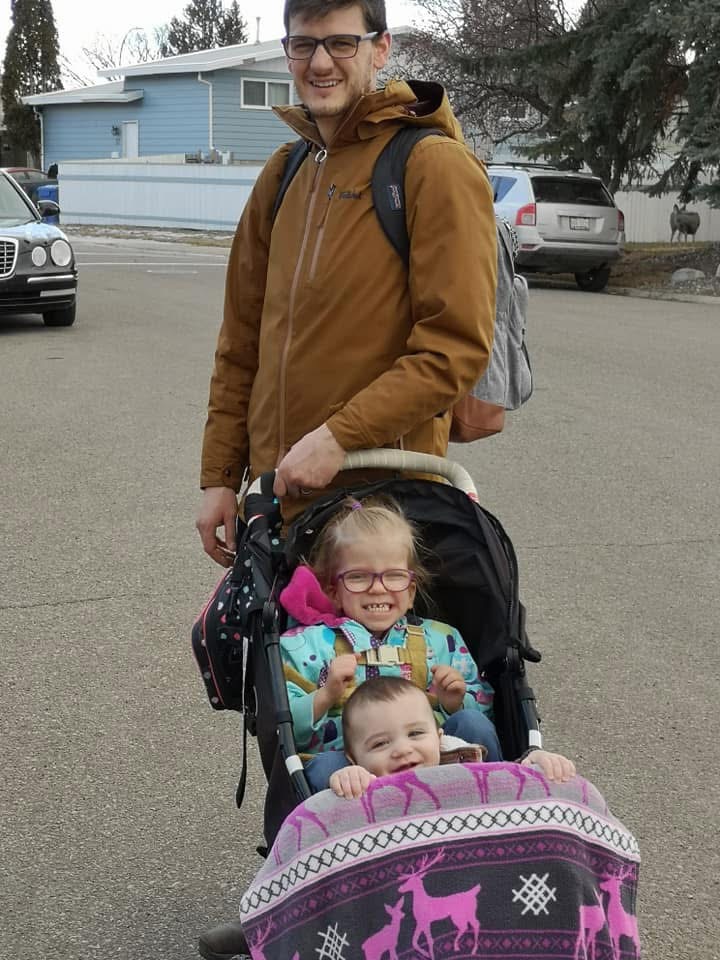
Teddy has been going through cancer treatment for over five years. “Relapse is the hardest,” said Emily. Harder still because during those years, Emily suffered a miscarriage five-months into her pregnancy. Their third child, named Johnny, was mourned and buried while the couple kept smiles on their faces for Teddy, as he went through multiple, painful procedures to save his life.
Only this summer, Teddy finally had his last round of chemo and was given the bell to ring in celebration at the hospital.
Most charities are nearly universally designed for a single round of support.
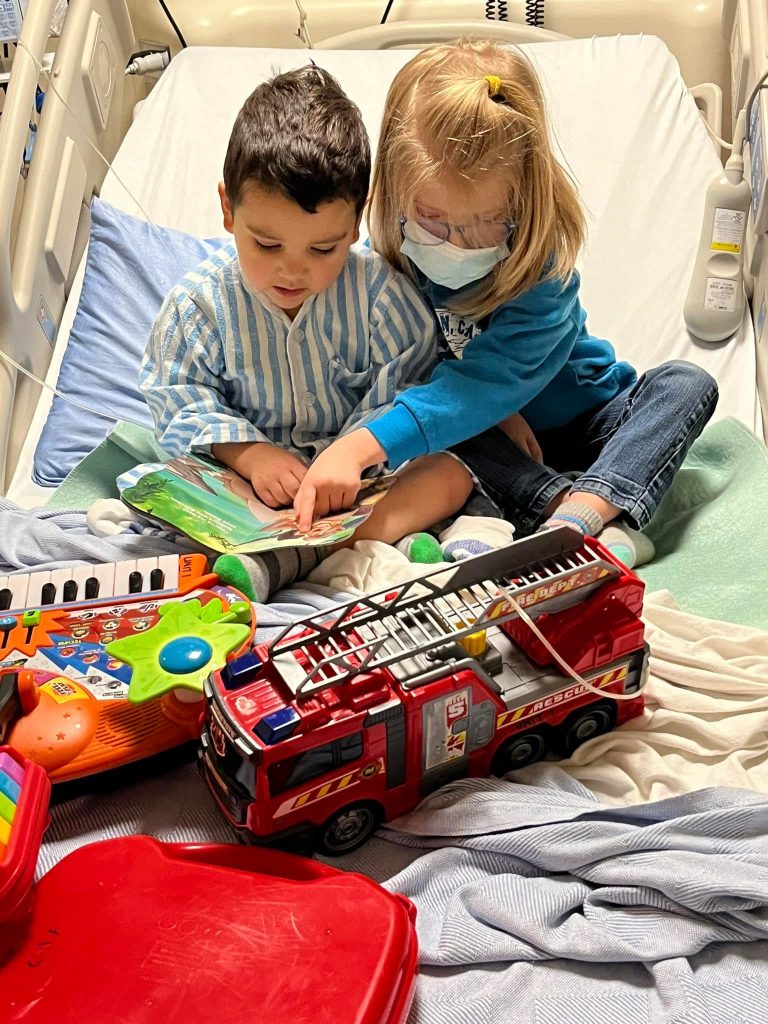
For families facing a long and deadly disease, friends and neighbours often rally at the start but then have their own lives to tend to. Everyone wants a quick update, with good news about winning a battle with cancer. When there isn’t good news, and treatment drags on for many years, many people feel at a loss for what to do or say, leaving the family alone with their struggles. Even most charities are nearly universally designed for a single round of support. “Helping Families is our favourite charity,” Emily said. “They helped when Teddy relapsed, but they cared about not just the cancer, they cared about our family. We never felt like a number. Helping Families was the only charity that was able to treat us like individuals.”
Helping Families provided for the necessities (mortgage payments, parking, gas, and groceries) but it was the fun events the team organized that gave Teddy’s family a chance to simply be a family, reminding them that their lives didn’t have to revolve entirely around cancer. “Over 78% of relationships fail when a child goes through cancer,” said Emily about marriage. “This was either going to destroy us or bring us together; we are such a support to each other.” It’s exactly this kind of situation where Helping Families puts “life” into a lifeline for parents.
On top of that, Ryan was the first recipient of the Helen Stock Legacy Bursary that allowed him to return to school for the third time and finally complete his goal. “That was such an emotional boost,” said Emily. “Dads sometimes get pushed to the side. After he learned he could return to his studies, he told me, “Someone is saying they believe in me.”
“We don’t choose cancer,” said Emily. “But the nurses, doctors and Helping Families choose to be with you when you’re going through the worst days of your life. Anyone looking for a way to help others, think of Helping Families Handle Cancer.”
—
Interested in continuing to make a difference for more families like Teddy’s?